Monday, July 18, 2016
HOKA ONE ONE Endurance Crossroads Clinic Sat, 6 August, 2016 – Sacramento City College
Sunday, July 17, 2016
Catching up with former Jesuit HS runner, Paul Thomas...
=================================
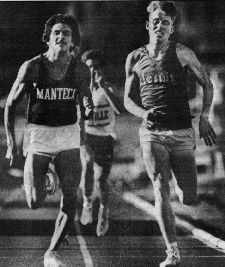
Today we chat with one of the all-time greats from Jesuit High School, Paul Thomas (on the right courtesy of Bill Leung Jr). He graduated from Jesuit in 1987 so unfortunately was never able to compete at the California state XC meet individually and with his talented teammates (1st year of the CA state meet was in the fall of '87). You can check out Jesuit HS's incredible depth, especially in their distance events at this link. He still had plenty of success in high school such as winning the 1987 3200m. race and running a leg on the then national record in the Distance Medley Relay (9:56.3 still stands as the California record). The Jesuit 1985 XC team with the Mastalir twins and with Thomas as the 3rd man still holds the Crystal Springs course team record at 76:15.4. You can check out that list here. Thomas went on to compete at the University of Arkansas for legendary coach, John McDonnell. Thomas still gets his competition on by cycling and is just as successful in that sport.
1) How did you get your start in running? Aside from XC and TF, what other sports did you play before and during high school?
I started running at the age of 10. I was playing Pop Warner football, where my running talents were noticed by a parent as we ran laps before and after practice. I was a sub par player, but ran circles around everyone on the laps. Thankfully that parent was there to realize my lack of ability on the field and potential on the track. I ran a 4:35 1500m a few months later at the age of 11. A year later, I ran 33:52 for a 10k. I was now 100% free of splinters from my bench time in team sports which require hand eye coordination.
2) Looking back at your high school experience in both sports, what were your personal and team highlights?
To this day, I have great results when I am brand new at something. My first race as a 114lb freshman was at the Clovis Invite on the famed State Meet course at Woodward Park in the Varsity race. I ran 15:08 for the 3 mile course, finishing second behind a senior from Mt. Whitney HS. The premature success probably limited me in some ways. I really did not like the pressure or responsibility to be the top runner, especially with the huge respect I had for the upper class-men on the team, not to mention the Mastalirs in the class ahead of me. I only ran a few track races my freshman year. The summer following my freshman year, on a whim ran a 10k in William Land Park where I posted a 32:01 10k with a blazing 5:45 for the last 1.2 miles.
Fast forward to 1987, my senior year, I started off with some great indoor races. I ran a handful of reasonable times off very slow paces. At the Indoor Nationals at Yale I was the crowned the National Champion, although losing to a Canadian, Brendan Mathias, running 4:10.? for 1600m, with a 1:58 last 800m. A few hours later, I found my way to the starting line where I had low expectations, but running
8:58.8 3200m. finishing right behind Marc Davis and Todd Williams. Arcadia was a few weeks later, where I ran 8:53 with another fast closing 800m., besting Marc Davis for the win.
Although I won the California State Meet in the 3200m. (video link here), I had my head hanging low before and after, as I really wanted to win the 1600m, which was a few hours prior..losing to Bellarmine's Scott Robinson (video below). (Scott, if you are reading this, I want a rematch!)
As far as team results that created happiness, there were many! Coming to Jesuit in the era which I did, I was a kid in a candy shop. I still scratch my head thinking what a fantastic opportunity we all took part in. It was not until a bunch of years had gone by where I realized what a dynasty we helped create.
As a freshman, we took a very young team to the Mt. SAC XC Invitational. I had previously run on the famed Mt. SAC course in an age group (Junior Olympic) XC race and loved the course. We won the Team Sweepstakes with 3 sophomores, 1 junior, 2 seniors and 1 freshman. We would come back 2 years later, setting the coveted team time record. That year, 1985, we had a phenomenal team. Our top 3 were unreal with a solid top 5, but lacking a 6 and 7. Had the top 5 all performed at 95% on that same day, they would have renamed the race to the "Jesuit Sweepstakes!".
Track season of my Junior year was highlighted with a National Record in the DMR, where the Mastalir duo, Dan Cahill and I ran 9:53 at UC Davis. I will never forget the energy of the entire stadium. While all schools in attendance were competitors/rivals throughout the year, collectively, the stadium was behind the our record attempt. We took a 10 year standing record away from South Eugene, only to lose it the following year to The Woodlands, where my future Arkansas roommate (Eric Henry) anchored a 4:03. On the same UC Davis track, Eric, Mark and I swept the 3200m at the Section meet. There is nobody who was happier to get 3rd place in so many races than me. I loved it!

3) Tell us a little about your high school coach, Walt Lange and what was his biggest influence on you and your teammates?
Walt Lange is Mr. Consistency. Over the years, hundreds have inquired about the secret formula that he had to make us so fast. In reality, there was no magic formula. What sticks out the most about Coach Lange is what he delivered at the beginning of my freshman year in 1983. Well before internet, he passed out loads of information stapled together:
-"Jesuit All Time Bests" for each of the scheduled meets.
-previous year's results
-Arthur Lydiard training philosophies
-history on the great runner's who passed through Jesuit
-dietary recommendations
He used to always tell us to Eat, Sleep and Run like a clock. It was not until years later that I realized he borrowed that quote from the great Jumbo Elliot.
It was consistently being consistent that brought Lange so much success. There are only a few programs that rival Jesuit, but accomplished success by big numbers. York HS and The Woodlands ran huge miles. Lange had tried all of the above in his 13 years of coaching before I arrived. There are many ways to achieve results. His simple recipe was perfect for the masses. Not many injuries. It seems like we all had pretty good leg speed.
Today I use this same wisdom: Apply sustainable efforts and success can be achieved for years to come.
4) You finished in 2nd place at the CA state meet 1600m. as a senior. What do you remember about that race?
I touched base on this above, a bit. Of course I don't dwell on it. However, if I could go back and make changes in one race, this would be it. I recall it being very easy. I think we went through 800m in 2:08. With 600m to go, the plan was to make it fast. I believe I ran 28 flat for that next half lap, followed up with a 30. A friend forwarded me the Youtube video a few years ago. Maybe I should have either waited til the end or not went so hard with 600m to go. Maybe I should have went harder?!? Did I say I don't dwell on it? Do you have the number for Uncle Rico from Napolean Dynamite? I need to someone to console me!
5) You attended the University of Arkansas. What led to your decision in choosing Arkansas? What other colleges were in the mix?
It was odd that I ended up at University of Arkansas. They would have never contacted me, as Coach McDonnell would later ask, "Why would a kid from California want to come the Midwest...or South?" While I went to the best high school program in the US, I thought I might as well do the same for college. It seemed like the logical thing to do at the time. In hindsight, maybe I should have chosen to go to the school and state I did my 5th grade book report on: University of Oregon. I was a huge Salazar and Dellinger fan when I was 11 years old. What 5th grader trades heroes Tony Dorsett, Roger Staubach etc. in for Coe, Ovett and the Oregon program? The reason why Oregon could have been a better option is because of my mentor, Harold Kuphaldt. Harold was 5 years ahead of me, where he and I shared similar abilities and age group program, The Roseville Gazelles. I respected (and still do) so much, I would have been more likely to stay on track with the Walt Lange mantra of a clean and simple life. At Oregon, maybe I would have kept the nights short and the choices of beverages light. Oregon did not reach out to me until April of 87 where I had already signed a letter of intent with the Razorbacks. Just like the State 1600m......coulda shoulda!
6) You ran for legendary coach John McDonnell at Arkansas. What do you remember most about him and why do you feel he was so successful?
John McDonnell was successful with same tools as Coach Lange. There were no secret workouts. Initially, he did not have the blue chippers coming to Arkansas. He built it from scratch. While he recruited from Ireland, his country, he was lucky to get the kids from the surrounding states. Even when I got there, the non foreign runners were from Missouri, Texas, Louisiana, etc. The late Dan Gabor and I were the first to come to Arkansas west of Kansas.
His training regime was simple. Run 50-60 miles week during the summer. You ran with the team 7 days/week. If you did this with proper sleep and nutrition, you would do well. If you didn't, it was going to be tough. It was tough for me and others.
John McDonnell was a motivator. He could have been one hell of a NFL coach. You would leave the team meetings wanting to conquer the world. Only if he scheduled the team meetings at 9pm on Friday and Saturday nights!
Recruiting and stretching a scholarship is what really set him apart from all other coaches. He did not leave any meat on the bone, which was wise. My freshman year I was on a flu scholarship. He immediately made everyone an in-state student, lowering his cost per athlete. Most of us were from non-affluent families, therefore qualifying them for Pell Grants. By the end, I was not on a full scholarship, but never had to pay. However, it was baffling to see how many phenomenal athletes were on little aid.
7) What were your college highlights and proudest accomplishments?
I was a rare case as a freshman, making the Varsity XC team. Although I made the traveling team, I should have red shirted and gathered my bearings. It was a huge transition for me: I can go on with all of the changes that led to a rough year and college career. It really came down to lack of sleep. I was an uncaged animal that was finally let out when I left to college. To this day, I am the last to leave a race venue or party. In college, I was the last to shut the door to my dorm. I never really had a huge season or moment in college. While I was on a handful of NCAA Championship teams, my individual efforts were never up to par. The greatest results were coming off a summer/winter break where I returned from Colorado where my parents where now living. I recorded the best result on the team in the VO2 Max test in August of 88. The problem was that it was August. The best actual race was the SWC Indoor Championships where Falcon, Reina and I crossed the line in the 3000m. Again, this was just off a winter break where I was back at the nest, eating, sleeping and running like a clock....just like that high school coach repeated!

8) At what point did you transition to cycling? What are the biggest similarities and differences between running and cycling?
As far back as high school, I always felt sufficient/fast on a bike. The Mastalir's, my brother and I always talked about doing triathlons. If I looked back in my year books, each annual's note from the Mastalirs would reference doing triathlons together. Two wheels were always in my future but did not make the leap until summer of 1993. In high school I read the triathlon publications. The sport of biathlon (later turned duathlon) was pretty big; led by Kenny Souza. In 87 I thought maybe someday I would duke it out with this long haired, Bon Jovi look-alike. My entrance in duathlon was similar to my arrival at Jesuit. I won the US Pro Championships in April beating Souza, Tinley and the other names I used to read about. A few months later, I was 4th at the ITU World Champs in Tasmania, Australia, winning the World ITU Series at the same time. My entrance to Jesuit was a foreshadowing of my debut as a multi-sporter.
The transition to cycling was pretty easy for me. I gave a feeble attempt to learn to swim. Swimming is much more of a technique based sport. If my last name was Mastalir, I probably would have won the Ironman a half a dozen times, as they were club swimmer growing up.
Efficiency and technique are also required in cycling. At least your legs are somewhat trapped in a circle where you can't deviate much from a perfect linear plane. Most think that cyclists are big and bulky. At 6 feet in height, the average Tour rider weighs between 150 and 160lbs. On the world level, Chris Solinsky is an anomaly. In reality, my morphology was much more compatible to being a cyclist.
I did not turn to bike racing until the age of 40 when I returned to Tucson. My wife had went to law school a the U of A. After suffering from allergies, asthma and sinus surgeries over her 40 years, she recalled that Tucson was the place where she had great health. We moved here in 2008. After going full throttle at work and life for 10 years, Tucson provided a more balanced life than San Diego, for theboth of us. I started riding to get back to fitness. I reach back to the memory bank and really started to eat, sleep, exercise like a clock.....for the very first time in my life. Now that I was getting older, I decided I wanted to be healthy and fit for the long haul. Cycling has been awesome. The cycling community here in Tucson is the best. Having the the correct setting has made the athletic side of me sustainable.
In the last 5 years, I have defied the rules of age. While I do not train or live like a pro, I have used some wisdom and given genetics to somehow perform at a national level, although I type here at age 45. Some would say, including me, that I left a lot of meat on the bone in my formidable years as an athlete. If I could hypothetically go back and do it right, with the caveat of being done at age 27 vs. doing it the way I have, I think I would take the same rocky road;being healthy and fit for a life time.
9) From your perspective as an experienced runner and cyclist, what would you say really worked for you training wise in high school and what do you wish you did differently?
What worked for me in the good times is the same that works for anyone that performs at a high level. Live like the clock Lange once spoke about. Of course there are athletes who respond better to volume and some better to quality. It takes a bit of intuition to find what works best for you. It can take years to figure this out. If you have zero intuition, you may never know. To this day, Coach Lange or McDonnell could better tell you what worked for me than myself. An endurance athlete inevitably has to have a big aerobic system. In HS, I recall doing two 70 miles weeks each spring. These 14 days built a good foundation to race hard until the end of May. I recall doing lots and lots of strides. In my coaching of triathletes, strides are a key ingredient. They do not tap the anaerobic system and if done on these fancy turf infields, they are easy on the legs!
10) What is your advice for current high school runners with aspirations of competing in college and beyond?
First of all, get a training log. I still like to use a handwritten log. I use a weekly planner. Later in life you get to look at these as story books. I have logs dating back to 1984. However, there was a block of years where I did not train much. When we were evacuated for the San Diego fires years ago, Noreen grabbed the cats. I grabbed my training logs! Keep a log! You can always go back and find out what was going on in your life when you were going good.....or even bad.
Have heroes and role models. Study stats. Have passion about the sport. Know more about the sport than the guy standing next to you on the line. Have short and long term goals. Have realistic goals. Think long term. Do the base work, do the speed work. Make it fun so it does not feel like work. Enjoy your team mates. Help your team mates. Never look at the picture from 2 inches away. Look from reasonable
distance.
Most importantly create your good luck by being placed in the hands of greatness! Somehow I landed in the hot beds of HS and college programs. Again in multi-sport, I landed in the hands of the best. Make opportunities come your way. Just like dating, the girl of your dreams will never come and knock on your door. Put yourself out there and great things will happen. Lastly, if your coach tells you to eat, sleep and run like a clock, do it!
11) Anything else you would like to add.
Endurance sports is a cumulative journey. Each years builds on the next. There aerobic system is much stronger than our legs. Your heart and lungs have no idea if you are running, rowing, cycling, swimming etc. I spoke to Jordan Hasay her freshman year in high school at the FL meet. When I asked her about her training, her data was 60 miles per week with 4 days of swimming 2miles (M-TH) I assume her 31 other competitors (yes, FL used to have 8 from each region) ran approx 30-40mi per week. Assuming 40, that is about 4.5 hours of training. Jordan had 7 hours of running plus her 4 hours of swimming. The other girls chasing the 14 year old through Balboa Park were only doing 39% of what little Jordan was doing. Your body can handle much more than you think. I just finished a 5 day Pro stage race (www.tourofthegila.com) at age 45 where I thought for sure I was going to have to DNF. Know your limitations, but do not be afraid of them.
Simplicity: Lead a very simple life if you want success at sport. The great Haile Gebrselassie was once asked which of the 5 Mercedes Benz prizes was his favorite to drive. His reply said that he did not
drive any of them. If his life got cluttered with complex living, his running would slow down. Have your basic necessities. Even too many pairs of running shoes can be bad. Live lean and maximize your potential with what you have.
Recovery: This is something I should have written a 2000 word essay on. This is an around the clock process. Recovery never stops. When I am racing a 100mi stage, the calories I am consuming during the race is setting me up for tomorrow's stage. Never stop the recovery process.
Sleep: Sleep a minimum of 8 hours every night . Structure your life where you go to bed no latter than 10pm. Even if you sleep 1am-9am, you have disturbed your internal clock. Sleep is the absolute most important element in getting fast. Hard workouts are 100% useless if you do not get sleep. Again, sleep supersedes everything and everything.
Nutrition/Hydration: I drink a minimum of a gallon of water per day. It does not matter if I am not training. Hydration is is the key to life. Food: I am not a vegan, vegetarian or any known classification. However, I consume several pounds of produce per day. It is nearly impossible to eat too many vegetables. Fruit in
the morning and mass amounts of vegetables in the evening. As soon as you are done training, have a bottle of liquid nutrition available. 100gm of carbs following training is a step in recovery.
Body work: This is something that was unheard of when I was younger. Massage, self massage, epson salt baths, ice baths, compression boots. There are so many tools in speeding up recovery. If these are done religiously, you can then imagine going from a 4:20 miler to a 4:05 miler.
If it wasn't from that first opportunity where my running was discovered by a football dad, I would be elsewhere right now. You do not have to be an elite athlete your entire life to be successful. However, being fit, lean and healthy a life time is something my friends really admire. If you make it feel like work, it will be
short lived. Do not be the super star from age 14-24 then give in. Live CLEAN! Create your own opportunities. Thanks to the many that has contributed to this fine ride I have enjoyed. Many more
experienced lie ahead!
Thank you very much for your time Paul! AJC
Saturday, July 16, 2016
2016 Cross Country Schedule (please add your meet)
Please continue to add meets that are missing from the list below. You can add them below or email me the date at albertjcaruna@gmail.com.
September 1 Jaguar Invitational at Eagle Lakes
September 2 Highlander Invitational at Woodward Park
September 3 Lagoon Valley Classic at Lagoon Valley Park
September 3 San Benito Dry River Run at San Benito High School
September 6 Monte Vista Invitational at Oak Hill Park
September 6 Lynbrook Center Meet at Lynbrook High School
September 10 Earlybird Invitational at Toro Park
September 10 Ed Sias Invitational at Hidden Valley Park
September 10 Stevenson Invitational at Stevenson High School
September 10 Jesuit/Davis Jamboree at Granite Regional Park
September 10 Sierra Invitational at Legion Park
September 16 9th Annual Bill Springhorn Classic at Shasta College
September 16/17 Woodbridge Cross Country Classic at Silverlakes Sports Park
September 10 Stevenson Invitational at Stevenson High School
September 10 Jesuit/Davis Jamboree at Granite Regional Park
September 10 Sierra Invitational at Legion Park
September 16 9th Annual Bill Springhorn Classic at Shasta College
September 16/17 Woodbridge Cross Country Classic at Silverlakes Sports Park
September 17 Farmer Invitational at Hayward HS
September 17 DLS/CHS Nike Invitational at Newhall Park, Concord
September 17 Viking Opener at Spring Lake Regional Park
September 17 Bret Harte/Frogtown Invitational at Angels Camp
September 17 Josh Ruff Memorial Invitational at Willow Hills
September 17 DLS/CHS Nike Invitational at Newhall Park, Concord
September 17 Viking Opener at Spring Lake Regional Park
September 17 Bret Harte/Frogtown Invitational at Angels Camp
September 17 Josh Ruff Memorial Invitational at Willow Hills
September 24 Ram Invitational at Westmoor HS
September 24 Clam Beach Invitational at Clam Beach State Beach
September 24 Dana Hills Invitational at Dana Hills High School
September 24 Tiger Invitational Elkhorn Golf Course (NEW)
September 28 Salinas City Championships at TBA (NEW)
September 30 Palos Verdes Invitational at Palos Verdes High School
September 24 Clam Beach Invitational at Clam Beach State Beach
September 24 Dana Hills Invitational at Dana Hills High School
September 24 Tiger Invitational Elkhorn Golf Course (NEW)
September 28 Salinas City Championships at TBA (NEW)
September 30 Palos Verdes Invitational at Palos Verdes High School
October 1 Stanford Invitational at Stanford Golf Course
October 1 Artichoke Invitational at Half Moon Bay HS
October 1 Scott Bauhs Invitational at Shadow Cliffs Park
October 1 Pacific Grove Invitational at Pacific Grove High School
October 1 Capital Cross Challenge at Hagen Oaks
October 5 Escalon Woodward Invitational at Woodward Reservoir
October 8 Serra Invitational at Crystal Springs Course
October 1 Scott Bauhs Invitational at Shadow Cliffs Park
October 1 Pacific Grove Invitational at Pacific Grove High School
October 1 Capital Cross Challenge at Hagen Oaks
October 5 Escalon Woodward Invitational at Woodward Reservoir
October 8 Serra Invitational at Crystal Springs Course
October 8 Clovis Invitational at Woodward Park
October 8 Castro Valley/Peter Brewer Invitational at Canyon Middle School
October 8 King City Invitational at TBA
October 8 Wildfire Invitational at Old Foresthill Course
October 15 Bella Vista Bronco Invitational at Willow Hills
October 15 33rd Annual Mariner Invitational at Hayward High School
October 15 Merced County Championships at Atwater HS
October 15 Monterey Invitational at Toro Park
October 19 Center Meet #1 at Crystal Springs Course
October 8 Castro Valley/Peter Brewer Invitational at Canyon Middle School
October 8 King City Invitational at TBA
October 8 Wildfire Invitational at Old Foresthill Course
October 15 Bella Vista Bronco Invitational at Willow Hills
October 15 33rd Annual Mariner Invitational at Hayward High School
October 15 Merced County Championships at Atwater HS
October 15 Monterey Invitational at Toro Park
October 19 Center Meet #1 at Crystal Springs Course
October 21/22 Mt. SAC Invitational at Mt SAC
October 22 FLAT SAC Invitational at Gibson Ranch
October 22 Yoshanny Invite at Ukiah HS (NEW)
October 27 Lynbrook Invitational at Lynbrook High School
November 5 SJS Sub Sections at Frogtown/Angels Camp
November 10 NS Championship at West Valley High School
October 22 FLAT SAC Invitational at Gibson Ranch
October 22 Yoshanny Invite at Ukiah HS (NEW)
October 27 Lynbrook Invitational at Lynbrook High School
November 5 SJS Sub Sections at Frogtown/Angels Camp
November 10 NS Championship at West Valley High School
November 12 CCS Championship at Toro Park
November 12 SJS Championship at Willow Hill Reservoir
November 16 SF Championship at Golden Gate Park
November 19 NCS Championship at Hayward HS
November 12 SJS Championship at Willow Hill Reservoir
November 16 SF Championship at Golden Gate Park
November 19 NCS Championship at Hayward HS
November 26 California State Meet at Woodward Park
Wednesday, July 13, 2016
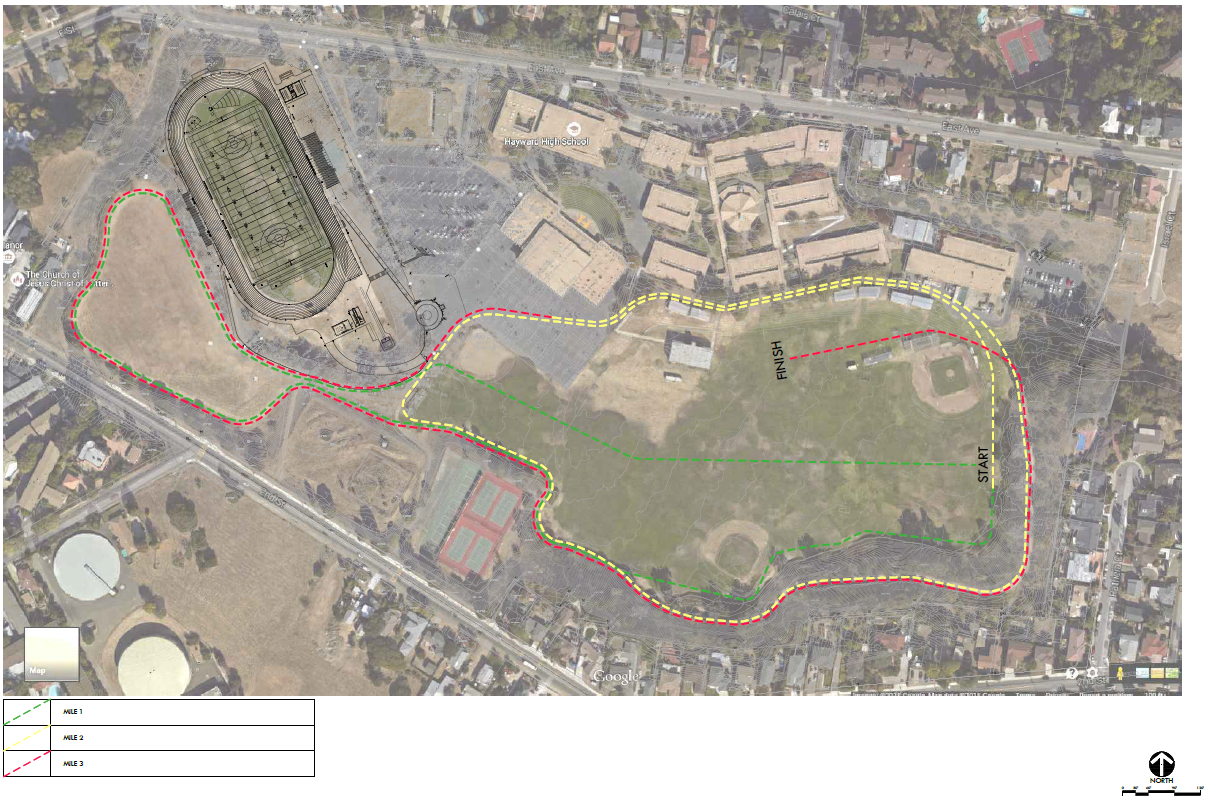
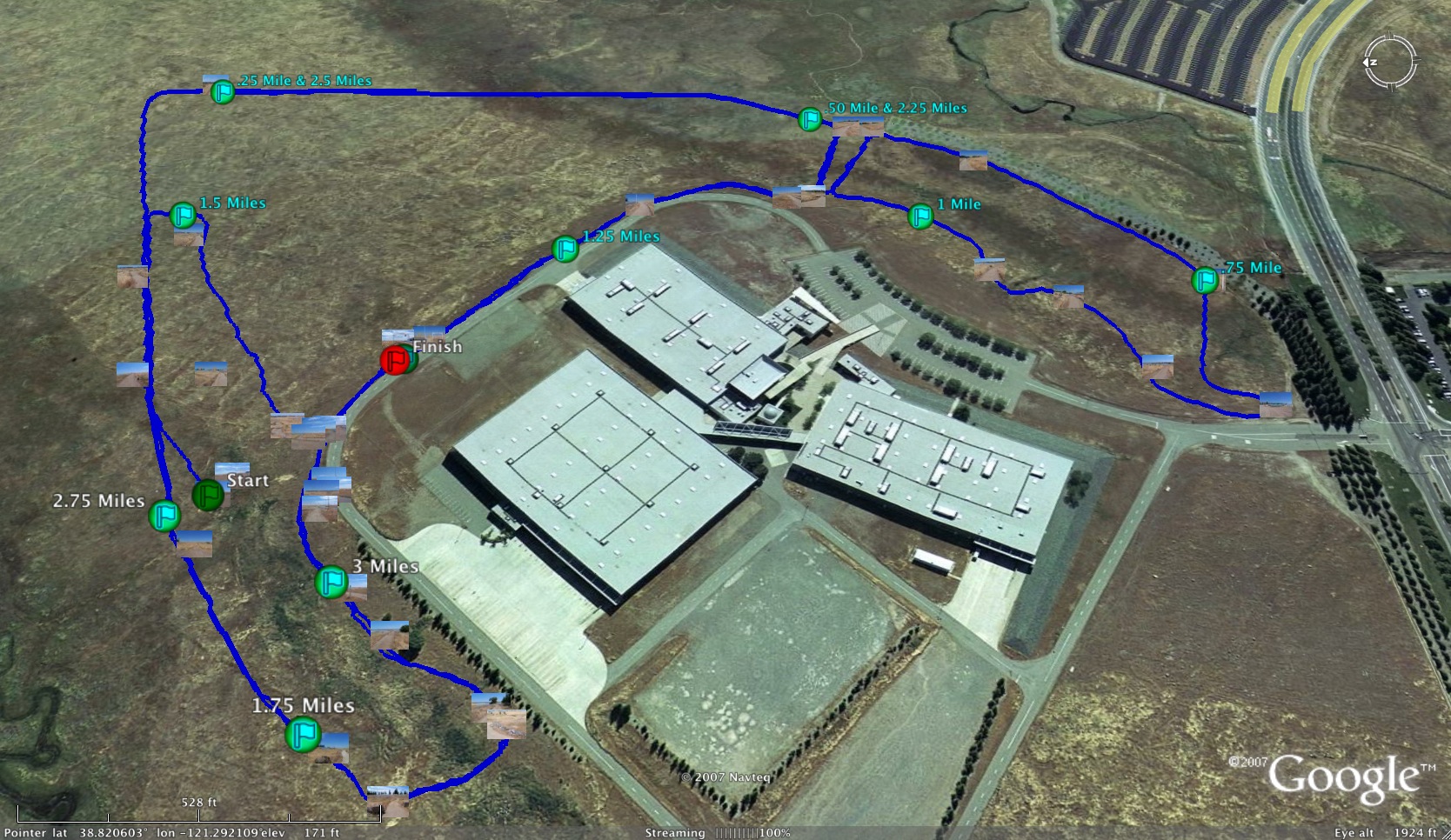
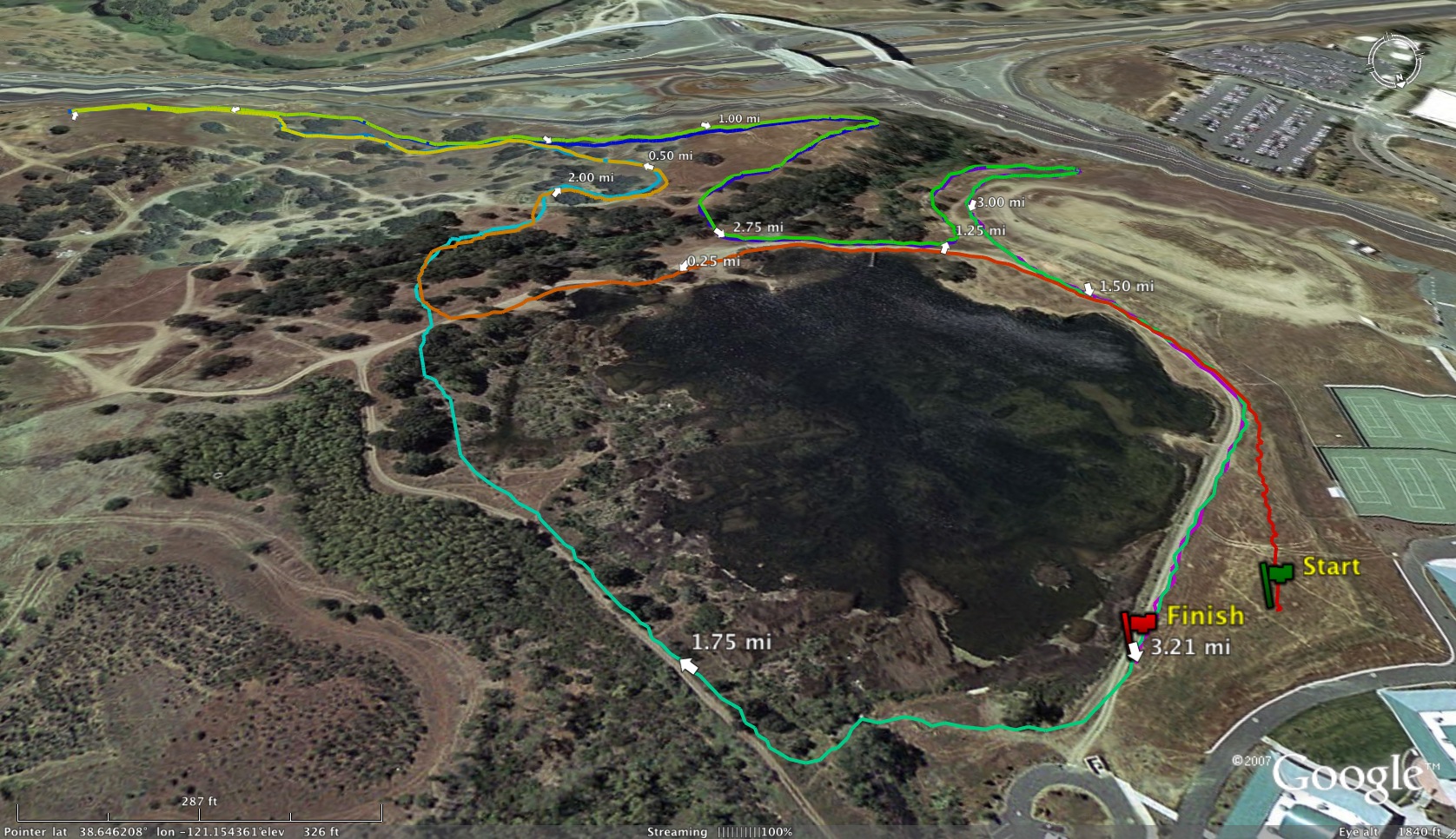
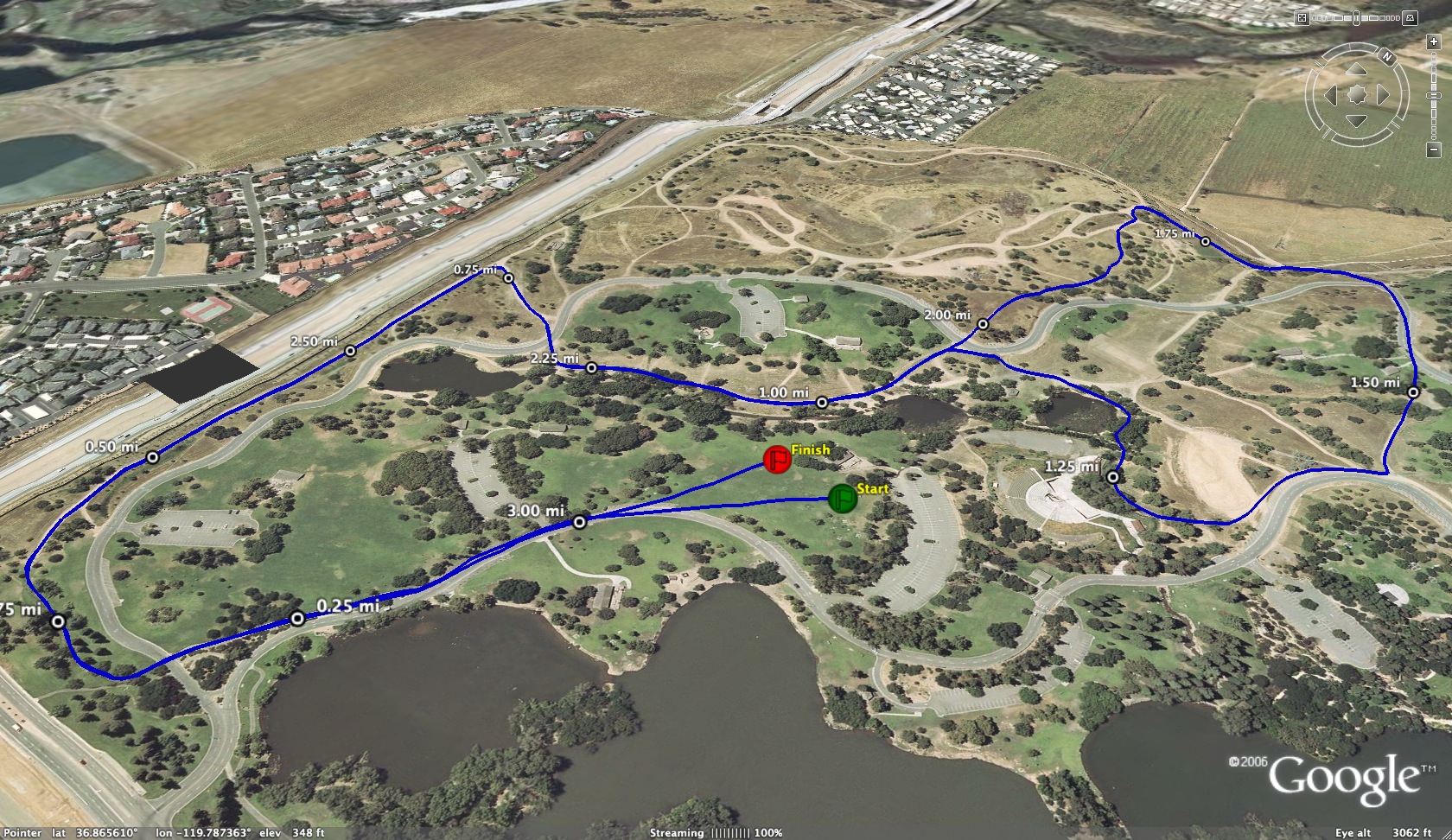
2016 Hayward High School Cross Country Course

Coaching job posting for Lick-Wilmerding
Cross Country Team Assistant Coach, Lick-Wilmerding High School
Lick-Wilmerding High School is a small private high school at 755 Ocean Avenue in San Francisco (one block from the Balboa BART station). The school has an enrollment of approximately 490 students and competes at the Division V level in the Bay Area Conference.
The cross country season begins on Monday, August 15 and lasts until the State Championship Meet in Fresno on Saturday, November 26. The Lick cross country team is expected to number around 80 runners this year with roughly an even number of boys and girls.
Practice sessions last from 3:30 until 5:45-6:00 p.m. M-F. 4 league meets are held during the week, starting at 4 PM usually, and the team participates in 3-4 Saturday invitationals during the season.
Requirements: Interest in working with high school athletes essential. High school, college, or post-collegiate distance running experience in a structured training program required. 1-2 years of distance running coaching experience preferred, but not required. Experience working with high school athletes preferred.
If interested in applying for this position, please contact Coach Jeff Gardiner at 415 730-0522; email: jeffreyjgardiner@gmail.com, or contact Lick's Athletic Director Eliot Smith at 415 333-4021. Pay on a 5-day week basis starts at $2000 depending on experience.
Lick-Wilmerding High School is a small private high school at 755 Ocean Avenue in San Francisco (one block from the Balboa BART station). The school has an enrollment of approximately 490 students and competes at the Division V level in the Bay Area Conference.
The cross country season begins on Monday, August 15 and lasts until the State Championship Meet in Fresno on Saturday, November 26. The Lick cross country team is expected to number around 80 runners this year with roughly an even number of boys and girls.
Practice sessions last from 3:30 until 5:45-6:00 p.m. M-F. 4 league meets are held during the week, starting at 4 PM usually, and the team participates in 3-4 Saturday invitationals during the season.
Requirements: Interest in working with high school athletes essential. High school, college, or post-collegiate distance running experience in a structured training program required. 1-2 years of distance running coaching experience preferred, but not required. Experience working with high school athletes preferred.
If interested in applying for this position, please contact Coach Jeff Gardiner at 415 730-0522; email: jeffreyjgardiner@gmail.com, or contact Lick's Athletic Director Eliot Smith at 415 333-4021. Pay on a 5-day week basis starts at $2000 depending on experience.
High School Track and Field/Cross Country Rules Changes Include Assisting Injured Competitor
NATIONAL FEDERATION OF STATE
HIGH SCHOOL ASSOCIATIONS
NEWS RELEASE
High School Track and Field/Cross Country Rules Changes Include Assisting Injured Competitor
FOR IMMEDIATE RELEASE
INDIANAPOLIS, IN (July 13, 2016) — Effective with the 2017 high school track and field season, a participant who assists an injured/ill competitor shall not be disqualified if an appropriate health-care professional is not available.
The NFHS Board of Directors recently approved all rules changes recommended by the National Federation of State High School Associations (NFHS) Track and Field Rules Committee at its June 13-15 meeting in Indianapolis.
Becky Oakes, NFHS director of sports and liaison to the Track and Field Rules Committee, said the committee determined that this act of sportsmanship extended to an injured/ill competitor when a health-care professional is not readily available should not result in a penalty.
“The committee wanted to recognize the importance of appropriate healthcare of an ill/injured competitor as well as recognize that at times there may be fellow competitors who may need to assist others who cannot continue,” Oakes said. “Therefore, the committee felt that disqualification shouldn’t be the result of a sportsmanship act.”
In order to be consistent with current sport trends, the committee revised Rule 5-7-3, which reinforces the concept that competitors in distance races only use a standing start and shall remain motionless for the start without their hand(s) touching the ground.
The rules committee voted to combine Rule 6 (Throwing Events) and Rule 7 (Jumping Events) into one rule titled “Field Events” to eliminate duplication of definitions and unnecessary language and the possibility of making a change in the throws and missing it in the jumps.
“The last couple of rules cycles the committee has been trying to eliminate unnecessary and repetitive language. This is the last phase of the clean-up – creating one rule that covers multiple events,” Oakes said.
For purposes of risk management, the committee revised Rules 6-2-14 and 7-2-5, which state that all warm-ups in a field event may not take place until the venue is declared open and required supervision is in place.
In Rule 5-6, the committee moved the Note in Rule 5-6-4 to the new Article 4. Oakes said the results of running events are based on head-to-head competition and all contestants should have the opportunity to compete in the heat earned by the competitor’s place and/or qualifying times.
The committee also approved a change to Rule 3-6-1, which now grants authority to disqualify a runner for a false start to the starter as well as the referee. Also, the starter will now give a signal at the beginning of the last lap in individual races of two laps or more (previously three).
Another change was made in Rule 3-2-4u, which states that the games committee – not the coach – should have the responsibility of providing liquids during the competition.
In Rule 3-10-7, when flags are not utilized, the head event judge utilizes the mechanics to call “fair” or “foul.”
Other changes approved by the committee include:
· The removal of the Note in 4-3-1b(5), which contradicts the rule by limiting the placement of the American flag to one piece of uniform apparel.
· Rule 4-6-5g, which states that it is an unfair act when a competitor receives physical aid from any other person during a race or trial, except as provided in Rules 4-6-5 and 9-7.
· Rule 5-1-3, which notes that, in absence of a curb, if cones are used, they should just touch the inside of the line and be placed about 5 feet apart around the curve.
· Rule 6-2-17, which clarifies how trials are recorded when a legal implement breaks during competition.
· Rule 6-5-9e, which notes that if a shot put competitor touches the top or end of the stopboard before leaving the circle, it is a foul.
· Rule 9-1-3b for cross country states that the race course should include either directional flags and/or directional sign posts.
· Rule 10-2-2, which notes that when multiple takeoff boards are used in the long jump and triple jump, the 20-meter distance shall be from the foul line farthest from the pit.
A complete listing of the track and field rules changes will be available on the NFHS website at www.nfhs.org. Click on “Activities & Sports” at the top of the home page, and select “track and field.”
According to the 2015-16 NFHS High School Athletics Participation Survey, there are 578,632 boys participating in outdoor Track and Field at 16,358 schools and 478,726 girls at 16,309 schools.
Monday, July 11, 2016
California Coaches Association Year End Awards

http://www.calcoachesassociation.net/
Saturday, July 09, 2016
2016 CIF State Meet Auto Team Entries for each section
http://static.psbin.com/3/k/j5fx7bsv83m2h2/2016_Team_Entries.pdf
The only changes from the 2015 season is that the Los Angeles Section gains one spot in Division III for both boys and girls.
The only changes from the 2015 season is that the Los Angeles Section gains one spot in Division III for both boys and girls.
Tuesday, July 05, 2016
2016 Pre-Season North Coast Section (NCS) Division II Cross Country Rankings
Here are the raw pre-season rankings with the top teams as well as top returning individuals.
Division II Boys (Top 3 Advance to state)
1) Monte Vista-Lose their top runner but everybody else is back.
2) Dublin-Missed making 2015 state meet with lots of talent returning.
3) Clayton Valley-Program back to prove 2015 was not a fluke.
4) Granada-Young, developing team with lots of upside.
5) Santa Rosa-Potent top two make them very dangerous to teams above them.
On the bubble (alphabetical order): Amador Valley, De La Salle, Liberty
2) Dublin-Missed making 2015 state meet with lots of talent returning.
3) Clayton Valley-Program back to prove 2015 was not a fluke.
4) Granada-Young, developing team with lots of upside.
5) Santa Rosa-Potent top two make them very dangerous to teams above them.
On the bubble (alphabetical order): Amador Valley, De La Salle, Liberty
Top 5 returning individuals, (place) and 2015 NCS meet time:
Daniel Pride (2) Santa Rosa 15:30.6 (Division I)
Anirudh Surapaneni (4) Dublin 15:32.1 (Division II)
Tristan Miller (3) Monte Vista 15:37.4 (Division I)
Dylan White (5) Clayton Valley 15:37.6 (Division II)
Luca Massanti (6) Santa Rosa 15:48.8 (Division I)
Daniel Pride (2) Santa Rosa 15:30.6 (Division I)
Anirudh Surapaneni (4) Dublin 15:32.1 (Division II)
Tristan Miller (3) Monte Vista 15:37.4 (Division I)
Dylan White (5) Clayton Valley 15:37.6 (Division II)
Luca Massanti (6) Santa Rosa 15:48.8 (Division I)
Division II Girls (Top 3 Advance to state)
1) Monte Vista-Just like the boys, they lose #1 but return a lot.
2) Granada-League rival who will rely on a strong sophomore class.
3) San Ramon Valley-Another talented group of girls who could challenge top 2 teams.
4) Liberty-Will need to rise to the challenge of upsetting one of three very strong teams.
5) College Park-Return their entire 2015 team. They will need to improve to move up.
On the bubble (alphabetical order): Amador Valley, Dublin, Santa Rosa
2) Granada-League rival who will rely on a strong sophomore class.
3) San Ramon Valley-Another talented group of girls who could challenge top 2 teams.
4) Liberty-Will need to rise to the challenge of upsetting one of three very strong teams.
5) College Park-Return their entire 2015 team. They will need to improve to move up.
On the bubble (alphabetical order): Amador Valley, Dublin, Santa Rosa
Top 5 returning individuals, (place) and 2015 NCS meet time:
Meredith Corda (3) Monte Vista 17:53.5 (Division I)
Myrthe Bellers (4) Irvington 17:53.9 (Division I)
Kinga Bihari (8) Granada 18:37.8 (Division II)
Molly Neach (8) San Ramon Valley 18:38.4 (Division I)
Madalyne Coney (9) Monte Vista 18:40.3 (Division I)
Meredith Corda (3) Monte Vista 17:53.5 (Division I)
Myrthe Bellers (4) Irvington 17:53.9 (Division I)
Kinga Bihari (8) Granada 18:37.8 (Division II)
Molly Neach (8) San Ramon Valley 18:38.4 (Division I)
Madalyne Coney (9) Monte Vista 18:40.3 (Division I)
Please feel free to chime in on the rankings above. I won't be offended if you strongly disagree as the above rankings are meant to be a launching pad for conversation. Fortunately section titles and state meet berths are decided by the runners themselves. Any impact freshmen that we should know about?
Saturday, July 02, 2016
Cooper Teare runs 2nd fastest mile/1600m in NCS history

Also, his 8:51.85 3200m time from the CA state meet is now the 5th fastest time in NCS history trailing only the following runners:
Richard Kimball DLS 8:43.5 1974
Rod Berry Redwood 8:50.4 1977
Bob Grubbs Washington 8:51.5 1972
Jay Marden Mission SJ 8:51.64 1981
Subscribe to:
Posts (Atom)
Popular Posts
-
 Bumping this back up to the top. The list has not been updated in a few years so if you have athletes that you think deserve to...
 -
If you are an athlete and you have a question about race strategy, training or anything else that is pertinent to Track & Field and/o...
-
 You can now view all the entrants plus their performance mark from the section qualifier for this weekend's CA State Track and Field ...
 -
Central Coast Section Results: http://www.rtspt.com/events/cif/2017Meets/ccsxc17/ Sac-Joaquin Section Section Finals: http://timerhub....
-
Just added: Info for Ghebray Invitational on September 22nd. With one extra Saturday in September next year, I started to hunt down the d...
-
Below is the schedule for the 2013 Cross Country season. If you see any errors, additions or can confirm any dates, please email me at alb...
-
 I will continue to update this list throughout the year. Please feel free to add others in the comment section below. I know I do not hav...
 -
Bold meets are confirmed for 2014 season. Non bolded dates are from 2013 season. August 2014 8/22 Ryan Bousquet Memorial Run at Yorba Reg...
-
I will once again be writing up the preview article for the NCS Meet of Champions this year. Below are the stripped down version of the ...
-
I will start with one: “Somewhere in the world someone is training when you are not. When you race him, he will win.” — Tom Fleming What...