Showing posts with label Coach Pup. Show all posts

Thursday, September 17, 2026

De La Salle Invitational Meet Preview by Sonoma Academy coach, Chris Puppione

You can check out his meet preview at this LINK. Live results will be posted at this LINK.

If you want to check out other posts by Coach Puppione which are super informational, go to this LINK.

Feel free to comment below if you plan on racing, attending, or cheering from afar. 

Tuesday, December 03, 2024

What would you like to ask Coach Chris Puppione?

I moved this to the top as many of you are not familiar with this series since they were first posted in 2009. Chris is now back coaching at Sonoma Academy, where his boys qualified for the state meet along with an individual girl. The links below are still full of useful information that could help you or your team during the upcoming season.

You can also see what Malmo posted in the comment box in regards to the long run. Good topic of discussion.

================================================
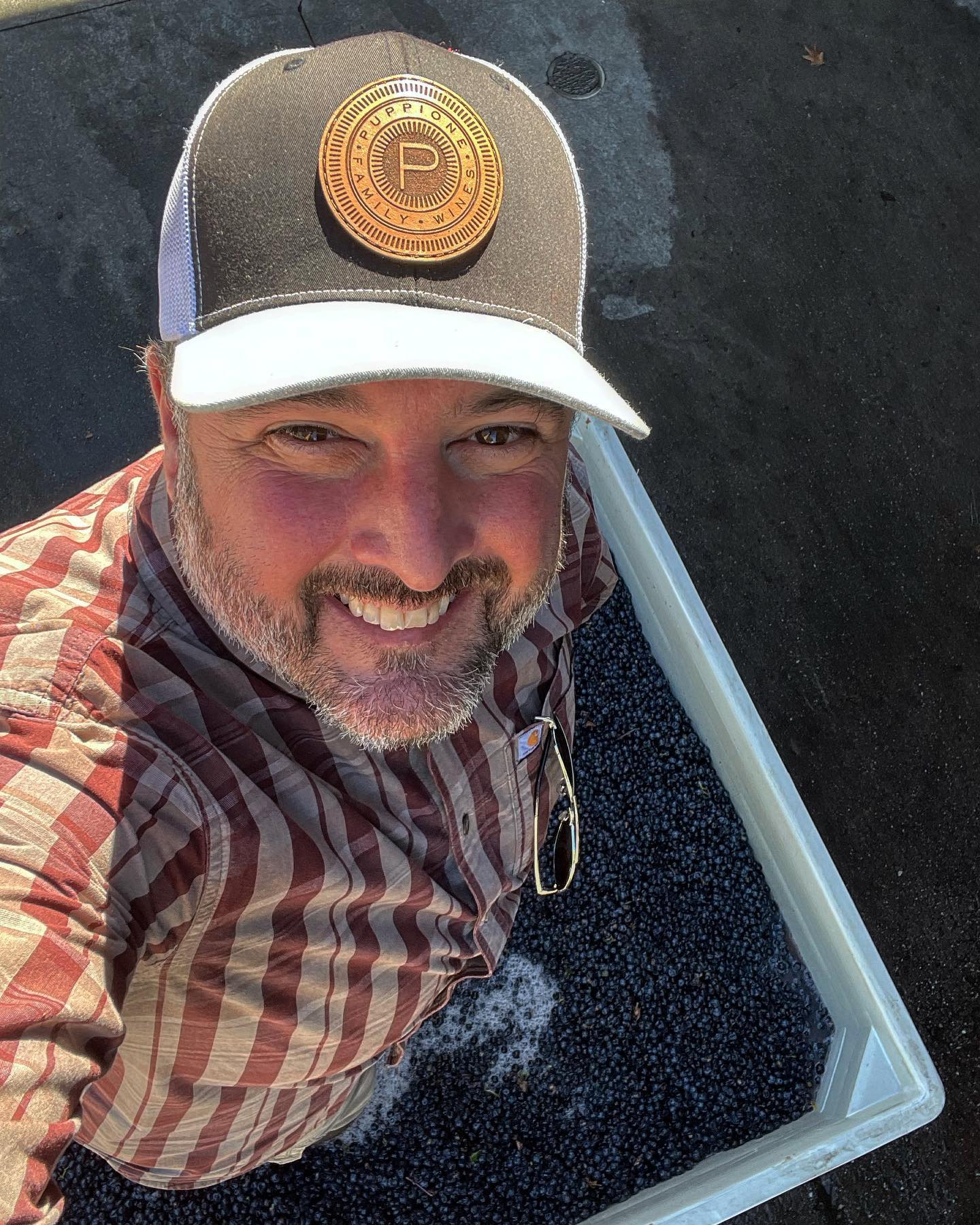
Some of the most popular posts on this blog have been the training articles that were posted during cross country season by former Miramonte Cross Country and Track and Field coach, Chris Puppione (pictured to the left during his coaching stint with UC Davis). What we did in the past was for me to ask the questions to Chris pertaining to topics that you can see linked below. Some of you are familiar with them already but for those of you that are new to the site, they are definitely worth a look.

We would now like to open up this process to the coaches, athletes, parents and fans out there and ask for your input on topics for Chris to tackle next. YOU come up with the topic and from that topic, you ask the questions. Once we have enough choices, Chris and I will choose the best topic and post the answers on the blog.

Use the comment box below to list your topics and questions.

Peaking (Part I) by Chris Puppione...

Peaking (Part II) by Chris Puppione...


Peaking (Part III) by Chris Puppione...


Nutrition (Part I) by Chris Puppione...

Nutrition (Part II) by Chris Puppione...

Threshold (Part I) by Chris Puppione...

LT Training (Part II) by Chris Puppione...

The Long Run (Part I) by Chris Puppione...


The Long Run (Part II) by Chris Puppione...

Thursday, March 10, 2011

Dan Gabor Distance Festival Preview Story by SI coach Chris Puppione

It is hard to believe that 2011 makes it now 15 years since we lost Daniel Kirk Gabor in the TWA Flight 800 disaster. Dan—the 1987 CIF State 800m Champion— is Amador Valley High School’s only state champion in any sport, but regardless of whether or not that distinction fades away, the legacy of his ferocity, grit, and flair will remain timeless. After all, isn’t that the goal of any track athlete—to be as close to timeless as possible? On this Friday night, March 11th, hundreds of high school runners from all over the Bay Area and Northern California will converge upon Amador Valley High School to chase the spirit and timelessness of Dan Gabor.

Girls 1600m
The first event of the day features a Who’s Who of young and up-and-coming talent in the distances. There are 11 heats of the Girls 1600m headlined by the hot heat that holds 19 young women who will be pursuing one another but also the 2008 meet record of 5:15.98 held by College Park’s Alycia Cridebring—now a freshman at UC Davis.

At the top of the list in this event is a stunning triumvirate of Lauren Kraus (Maria Carrillo), Jena Pianin (Amador Valley), and Spencer Moore (St. Mary’s-Berkeley). Kraus, a sophomore, has been a force out of the North Bay and most recently capped her fall cross country season with a blistering 18:28-clocking to capture 13th place in the Div. III State Championships. As a freshman last spring, she notched PBs of 5:09/ 11:14 in the 1600/3200 events and she opened her outdoor campaign this year last Saturday with a time of 5:18.58 at the Big Cat Invitational.

It’s always nice to put on a meet and have a hometown hero in the hunt, and that is what the host Amador Valley Dons has in one Jena Pianin. This talented young lady, also a sophomore, enjoyed a banner year as a freshman for the Purple and Gold, collecting PBs of 5:13/11:04 for the 1600/3200 races. She was a state meet qualifier this last fall in cross country, and she has already stopped the clocks at 11:24 and change in the Dons early season scrimmage.

Moore, just a freshman at St. Mary’s, stormed onto the high school scene in the fall, winning the Div. IV North Coast Section Championships before tuning up the Woodward Park course with a time of 18:19 and a 7th-place finish, making her an All-State performer for the season. Moore is also a very seasoned youth competitor in track and field, so do not be surprised if this Lady Panther is the first across the
finish on Friday afternoon.

Boys 1600m
19 Heats. 390 competitors. The Boys 1600m race is the largest event in entire two- day meet and it comes down to a fast heat of 21 young men who are poised to make some noise as the sun goes down over Pleasanton on Friday night.

The event record of 4:19.23—set in 2009 by San Ramon Valley’s Sean Colaco—seems a tantalizing goal to dangle in front of these horses, with as many as 8-10 guys in the hunt for top honors on this evening.

Leading the seeding is Del Campo (Sacramento) senior Robert Pflasterer—sporting a 4:20.50 PB from one year ago. Pflasterer is also coming off a great fall season where he rolled to a 15:35-clocking in the Div. II State Championships to grab a top- 15 finish. Next up is Miramonte junior Jamie Fehrnstrom who just missed cracking the 4:20 barrier a year ago at the NCS Meet of Champions when he stopped the clocks at 4:20.11. He has already opened his season with a fine 1:58 and change effort in the 800m at the Skyline Inviational, so he should be ready to mix it up in this one. Anthony Martore of Castro Valley enjoyed a fine winter break, showing up at the Cal All-Comer’s Meet to register a sub-4:24 mark en route to qualifying for the Indoor State Meet. Martore, a senior, also posted some excellent times over the 800m distance last spring—most notably a 1:56.50, which makes him a top-10 returner in that event in the NCS.

From the other side of the bay come two WCAL foes—St. Ignatius’ Ciaran Murphy and Sacred Heart Cathedral’s Jarrett Moore. Murphy, only a sophomore, quietly posted a 1:58.90 800m time as a freshman last spring and looks to expand his horizons in this event on Friday night, while Moore—a top-5 returner in the 800m in the CCS with a 1:57.94 clocking in 2010—will be looking to do the same.

Perhaps the most deadly duo on the evening comes in the form of the College Park Falcons’ Jeff Bickert and Anthony Ortolan. Bickert and Ortolan were monsters in the fall, rolling to times of 15:16 and 15:30 respectively on the state meet course. Bickert, known more for his prowess in the longer events, is stepping down in distance to test his mettle, while Ortolan—a state meet qualifier last spring in the 800m (PB of 1:54.12)—might just be the most dangerous guy on the track.

That dynamic duo is frightening, but the next two guys make Del Campo into a terrifying trio, as Jordan Rushing and Jack Nevins complete the perfect storm for the boys from Sacramento. Rushing—15:45 at the state meet this last fall—and Nevins—15:42 in the same race—will bring their over-distance strength to the table as they look to challenge the best the bay has to offer.

The final name on the list of notables in this race is Trevor Fuhriman of Monte Vista—a top-returner from this race one year ago—who tore up the California High

School track just one week ago in the DMR with a 1200m leg that was timed in 3:08. That kind of effort is no fluke, so look for this Mustang to rear up and get after it on Friday night.

Girls 800m
The meet record in this event (2:12.76) is held by former-Carlmont great Justine Fedronic, and it does not appear to be in jeopardy—although this is a fine field of 800m runners. Headlining the show will be Katie Berge of Acalanes. Berge—a state meet qualifier last year in the 800m and 4x400m Relay—holds a personal best of 2:15.80 from last year’s NCS Meet of Champions final. Berge has been a force in this event since her freshman year, and many young ladies are breathing a sigh of relief that she is finally a senior and will be graduating.

Berge will be hunted by some excellent young 800m runners—led by Heather Donner of California High. Donner—the EBAL champion at this distance last year as a freshman—is the latest in a long line of fine two-lappers our of the San Ramon track powerhouse. She brings with her a PB of 2:16.58 and is noted as a gutsy competitor.

Someone who has enjoyed a good 2010-2011 year is Acalanes sophomore Amy Hollshwandner. Hollshwandner ran a leg on Acalanes’ state meet-qualifying 4x400m Relay last spring, registered a fine 18:46 clocking at the state cross country meet in the fall, and blistered the track in the winter as she finished 9th overall at the state indoor meet in the 600 Yard Run. Her mix of speed and strength make her very dangerous at this distance.

Speaking of speed, Jasmine Cunningham of Mt. Diablo brings a fair amount of that to Friday night’s event, sporting a 58.83 PB for the 400m from last year’s Stanford Invitational. Cunningham also ran well this winter, also qualifying for the state indoor meet in the 600 Yard Run.

Two more ladies to keep an eye on will be Moore from St. Mary’s, who will be doubling back from the 1600m, and Monte Vista’s Mikaela Hammitt—a one-time state meet qualifier in the 800m—who ran a season best of 2:17.11 one year ago.

Boys 800m
This race might have the most exciting stretch run of the night—especially with College Park’s Ortolan and Miramonte’s Ashraf Mathkour going head to head once again. These two are familiar foes, with these two boys running to a virtual tie at last year’s NCS Meet of Champions 800m final (Ortolan was determined to best Mathkour after going to the thousandth of a second level on the clock). Mathkour held an advantage come season’s end, registering an impressive 1:53.68 clocking from the state meet prelims over Ortolan’s aforementioned 1:54.12. Both are known to be hard-charging finishers, and Mathkour has already notched a 400m PB this season at the Skyline Invitational (50.42).

Also doubling back from the 1600m race will be Miramonte’s Fehrnstrom (1:58.71 last week), St. Ignatius’ Murphy, and Sacred Heart Cathedral’s Moore. These three guys will most certainly be in the hunt on Friday night under the lights, and if Ortolan or Mathkour are not on their best form, any one of these three guys could be there to clean up.

The dark horse in this race (although he may not see himself as nothing short of a contender) is young gun Adler Faulkner of Acalanes. Faulkner is the heir apparent it would seem in the NCS 800m event. Holding a PB of 1:59.84 from his rookie season, Faulkner enjoyed a very strong fall campaign in cross country as a state meet qualifier and then rolling right into the winter and torching the track in the 550m Run at the Cal All-Comer’s in order to qualify for the state indoor meet in the 600 Yard Run. In that event, Faulkner rocked to a 2nd place finish overall and is looking like the hot hand coming into this race. He could be very dangerous.

The meet record—set last year by Acalanes’ Toshi Kellogg—is a solid 1:55.73, but with this group on the track, you can count on it being in danger of falling.

Girls 3200m
There are 21 girls in the fastest of three heats of the Girls 3200m. Is it any surprise that six of them are from Campolindo?

Fresh off their Div. III State Championship title, the Lady Cougars look to continue their reign of terror in the longer distances at the Dan Gabor Distance Festival. Leading the charge will be arguably the most fearsome twosome ever to come out of Northern California—Carrier Verdon and Grace Orders. Both qualified for the state track championships one year ago (1600m and 3200m respectively) and they sport PBs of 10:42 and 10:44. Verdon was a state individual champion and Footlocker National finalist in the fall and Orders has signed a NLI to run for Vanderbilt next year. Yeah, they are fast…but not out of reach.

Kelsey Santisteban—a recent signee for the Golden Bears of Cal—will be giving chase to the ladies from Moraga. Santisteban hammered the Woodward Park course in the fall, putting up a time of 17:30 at the state meet and capturing Div. I All-State honors. She is a sub-5:00 1600m runner and could be very tough to handle on the oval. Look for her to run tough from the gun, as she is the defending champion in this event.

The last two people who could make up the front pack will be California’s Elaine McVay—a sub-11:00 3200m runner herself—and St. Mary’s Moore. Moore is entered in all three of these distance events, so we will see which ones she chooses to compete in on Friday night. McVay is known to really like to push things from the front, so you know she will be getting her hands dirty in this one.

The meet record of 10:52.32 by California’s Colleen Lillig is certainly in peril with this crew on the track, so look for an electrifying display.

Boys 3200m
This race could be one heck of a dual meet between Del Campo and Campolindo, with these two schools accounting for ten of the 30 finalists in the hot heat of the evening’s final event. Del Campo’s trio of Rushing, Nevins, and Pflasterer make up three of the top five seeds on the evening with only Castro Valley’s Ben Eversole (the defending champion in this event) and College Park’s Bickert breaking up the stronghold.

Eversole, like his teammate Martore, had a busy winter and has showed good early season form in all-comer meets and at last weekend’s Mt. Pleasant Relays. He is a state meet veteran in cross country and track, and with this being his senior season, he is surely poised to do some damage. Bickert, who will presumably be doubling back from the 1600m event, is a tenacious competitor and has a dogged desire to win every race he enters. If he toes the line, consider him a threat.

Other notables in this race include up-and-comers Thomas Joyce of Campolindo, Matt DeVries of San Ramon Valley, and Aidan Goltra on Las Lomas. Joyce wowed everyone at the CIF State Championships in the fall with his 15:31 clocking on the Woodward Park course. He was the DFAL Champion in cross country and will certainly be a factor in this race. DeVries looks to be the future of distance running at SRV, with the tough sophomore already looking like a seasoned veteran in his short stint as a high school harrier. He is definitely one to watch for the Wolves. And finally, it would be remiss not to mention the entry of Goltra in this event given that he is the hot-shot frosh in the NCS this year. He led his Knights squad to a fine season in cross country, culminating in a time of 16:03 at the state meet. He is an age-group athlete who has showed well so far in his prep career, and he will look to continue the good times with a solid race on Friday night.

Best of luck to all 917 athletes competing on Friday night!

“Run Like Dan!”

Sunday, January 02, 2011

Catching up with St. Ignatius coach, Chris Puppione...

Today we chat with St. Ignatius boys' coach, Chris Puppione.  He led his boys team to a 2nd place finish at the '10 CCS XC meet this past season.  The previous season, Chris helped guide the Miramonte boys to the state meet as they qualified from tough division III race.  You can see below the rest of his coaching stops which included a stint at UC Davis before his return to high school coaching.  Along with his coaching, Chris has also been a clinic presenter (picture to the left courtesy of Joe Hartman) and the best contributor to this site with his highly informational articles that you can find at this link.  


1)  How did you get your start in running?  What other sports did you play?
My first exposure to running came through my aunt and uncle on my mother’s side. When I was little, my uncle was running cross country at Christian Brothers HS in Sacramento, and he was pretty into it. My aunt, who was several years older than him, had been a great age-group runner as a part of the famous all-girl’s track club in Sacramento, Will’s Spikettes. She had transitioned from the track and was running marathons and ultras by the time I was around, and she also was a part of the early Fleet Feet years.

I ran a bit in grade school—CYO track in 3rd grade, I think. I was decent, but the races weren’t nearly long enough for someone like me. I ran my first road race at the age of 9—the Run to the Lake 10K in Castro Valley, where I grew up. I was second in my age group that day to a guy named Dino Daniels, who was a total sensation at that time. I think he worked me by a good seven minutes, but I still felt good about it. Later on, in junior high, I beat the school record in the six-minute run for sixth graders at Canyon Middle School during my PE class. We used to run part of the Canyon cross country course almost daily in PE class, and if we finished well, we could win a soda. That was motivation enough for me (my mother did not allow soda in our house), and I don’t ever recall losing when a soda was on the line.

I played everything as a kid. I started playing sports at age six, and I was involved in baseball, basketball, soccer, and swimming. I remember being in my dad’s car and having to change from one uniform into the other while we sped across town to get me from one game to the next. I had a lot of fun, and I was very competitive—a trait I picked up from my father. I was a part of some great teams and I got a taste for success at an early age.

2)  Where did you run in high school and what were some of your highlights?
 When I entered high school at Moreau (Hayward, CA), I came home from the first day of school with the athletic papers for my dad to sign.

“Football?” he guffawed. “You are kidding, right? What are you going to be—the kicking tee?”

I was 4’11” and 95lbs.

“No,” my dad said. “You will run cross country to get ready for soccer.”

And so began my running days in high school. I would end up running at both Moreau and Castro Valley HS before I graduated in 1992. I was lucky enough to make it to the state meet in cross country twice, as well as two trips to NCS MOC in track. In truth, I was not terribly fast, but I also did not invest the kind of work we ask of our athletes today. I didn’t run in the summers (I was swimming on a rec team), I didn’t run on the weekends (unless we had a meet), and I didn’t run over the winter break (unless I couldn’t get a ride to where I wanted to go). It wasn’t necessarily out of laziness as much as it was not really part of the culture. I mean, I would run sometimes just for fun or to get to a friend’s house, but I never saw that as training or trying to get better. I had success in running due in large part to my hatred for losing than for any investment in training I made. I would like to think I could have been faster if the culture was different and I had trained like we do now.

The things that stick out for me—finishing 1-2 at NCS XC with my teammate Mark Douglas in my junior year, finishing top-25 at state my senior year while suffering from bronchitis, being a part of a really fun DMR team at CVHS, and countless shenanigans with my teammates that ranged from team parties on Halloween to crazy runs on Mount Much-More, Mount Fuji, Sakamoto, Hamburger Hill, or through the rock quarry. I think those are the things I remember best—the great runs and crazy stuff that I shared with my teammates.

I think the runs are what I remember the most:
·        Getting lost running around Lake Chabot with my teammate Tim and turning a 9-mile day into a 23-mile day
·        A crushing 8-mile run in Tahoe with former state champ Kevin Berkowitz
·        A track session in the rain at CSU-Hayward
·        Repeat miles in the August swelter on the Canyon course
·        Aqua quarters on the gravel track at CVHS—gasping for air while choking on mouthfuls of water as we churned out lap after lap with a tortuous minute of rest between
·        Being nearly stampeded by horses in the Hayward hills when the Loma Prieta earthquake struck and having to sprint to the nearest barbed wire fence and dive over it to safety

Those mean more to me now than any medal or plaque I won. I can see something similar developing now in my guys at St. Ignatius—they have little jokes and rituals and “secret runs” that I know little to nothing about, and that’s cool. That means they are doing it right. That is where the bonds of a team are made. That is where they will create what Cardinal Newman coach Pat LaFortune calls “forever memories”.

3)  Who were your high school coaches and what did you take (learn) from them?
My real highlights revolve around my two coaches—Phil Wilder and Peter Brewer. I have written about them before in an article I wrote for your site, so instead of being redundant, I will just say that these two men are the reasons why I am a part of this sport today. They are great educators who use the sport to impart greater lessons—they are amazing people. Whether it was trips to Tahoe for camp or workouts that would make your eyes roll back into your head, Wilder and Brewer gave me the best of the sport in the form of inspiration and pain. I loved it. Most importantly, they taught me the love of the team approach. I loved my teammates. We all had such different personalities, and although we could try one another’s patience (and I tried a lot of people’s patience), we had learned how to put aside the personal battles and personal glory and seek something greater in the form of team success. Wilder and Brewer are two of the most influential people in my life, although I can hear them both snickering now, as if to say, “Great, he blames us, does he?” Well, yes, it is all your fault, guys—thank you.

4)  What about your college experience and highlights? 
My college was a great opportunity for me to learn, although at the time it was the most tumultuous thing I ever endured. I ran for one year at the Division I level, and suffice to say it was a difficult year. The coach that recruited me left over the summer (unbeknownst to me) and I came into a situation that was immediately tense and foreign to me. I had received no guidance over the summer prior to my arrival, and as such, I came to camp ill-prepared and had a less-than-stellar season of cross country, although I was our team’s #2 or #3 runner most days. I would eventually get the first of my eight stress fractures in January of my freshman year, and running never was really the same for me.

That year taught me a lot about what not to do, as both an athlete and a coach, and although I would have liked to have had some success at the Division I level, I think the knowledge I gained that year has proved invaluable to me as an educator.

I did try to run some more in my second year of college, this time at Diablo Valley College under the tutelage of Kevin Searls of Asics Aggies fame. Although I was never able to be healthy enough to help on the course, Kevin really taught me a lot about the sport through his example, and he definitely shaped who I am as a coach.

5)  What led you to your decision to pursue a career in teaching and coaching?
I never wanted to be a teacher. My parents were teachers, and I saw how tough that could be, so…yeah. Well, here I am. Truth be told, when I first started teaching, I thought it would be a good way to pay bills while I pursued my desire to write (I was a Creative Writing major in undergrad). So a little like Mr. Holland’s Opus, you know? Well, just like Richard Dreyfuss’ character, I discovered that helping my students and athletes became a greater passion for me than any piece of writing I could produce.

Also, I did not begin teaching with the intention of coaching, and if I was going to coach, it would not be running. However, when I interviewed for my first teaching job at Paraclete HS in Lancaster, CA, they asked about my athletic experiences. Once I let the cat out of the bag, I was given the task of coaching. And so it began…

6)  Who are and have been your coaching mentors?
When I began coaching in 1998, I really had no idea how to put together a season, a training week, or a workout. I only knew what I had done, and even my memory of the workout specifics from my running years was foggy. The best thing I did at that point was attending an LA84 clinic. At this clinic, I met Tim O’Rourke and Ken Reeves—two of the all-time greatest coaches in California high school history. After they gave their talks at the clinic, they stuck around for an extra hour or so to field some of my individual questions. They also hooked me up with training handouts, the LA84 manuals for XC and track, and gave me their emails and phone numbers. At that same clinic, I met Kevin Smith from Oak Park HS—another great coach, who also gave me his training plans, his email, and his phone number. These three guys really were my support system in the beginning of my career. Not only are they amazing with the X’s and O’s of the sport, they are incredible teachers and motivators. I saw in them the same gifts I found so helpful in my own high school coaches.

After I left SoCal in 1999, I went to Cardinal Newman HS in Santa Rosa. At this point, I worked as an assistant to Pat LaFortune, coaching cross country and track for both CN and Ursuline. Pat was a great mentor for me, as he taught me the importance of reigning athletes in and helping them to not place so much pressure on themselves. He loved to win just as much as the next guy, but to him, the victory took place within each individual athlete, not necessarily on the track or course. Pat allowed me to have a lot of freedom as a coach, so I was able to really stretch my legs as a young coach by trying out some different training methods. He also helped me shape what would become the foundations of my coaching philosophy.

It was also during my years at CN/URS and Amador Valley HS that I really leaned on the expertise and advice of Joe Rubio. The coach of the Asics Aggies club program, Rubio is also a frequent contributor to Running Times magazine and wrote what I feel is the best chapter in the book Run Strong, which was edited by Kevin Beck. Rubio is down-to-earth, hilarious, and brilliant all at once, and he has always been generous with his time and guidance. I learned a great deal from him about progressing an athlete properly and covering all your bases physiologically.

The last coach that I would recognize as a mentor would be Doyle O’Regan—the incredibly successful and modest coach from Piedmont HS. Doyle has an uncanny ability to help his kids rise to the occasion, and he is also one of the most gifted intuitive coaches out there. He just knows what needs to be done when and for how long. No charts, no fancy science. Doyle is really an example of someone who is artful in his coaching.

I would be remiss if I did not mention my father as a mentor to me in my coaching, although he never coached in our sport. My father coached me in baseball, basketball, and soccer when I was a kid. His fiery style and overwhelming love for competition left a mark on me. Most importantly, my dad made all of his athletes feel like he genuinely cared about them, and I try to do the same with my kids now.

7)  Tell us a little about coaching experiences before heading to the college coaching ranks.
As I mentioned, I began coaching in 1998 at Paraclete HS in Lancaster, CA. My teams had some success, winning league titles that year and sending kids on to the CIF-SS championships in XC and track. I learned a lot that year, mostly through my mistakes, and I was lucky to have some really great kids to work with that year. It was a trial by fire, and coaching in the desert was certainly a crazy experience. At times, it would be 115 degrees outside, and then on other days, we were combating body-chapping winds of over 40 miles an hour! I really learned how to improvise as a coach, and I think that is a skill that has served me well in the years since.

When I arrived at CN/URS in the fall of 1999, the program was not in the best place. Numbers were low and the cross country teams were routinely at the bottom of the league and NCS. Pat and I made a great team, and we were also fortunate to have a great influx of talented kids during my time there. By the time I left in 2002, we had sent athletes and teams to the state meet in cross country and track. This was also the first time I dealt with having a truly superior athlete in JK Withers, who would go on to run at the University of Oregon. I learned a lot from working with JK, and his relentless drive and desire to truly be great at his sport forced me to be a better coach for him. I was also really blessed to coach with some of the better coaches in California in the North Bay League at this time—Larry Meredith (Montgomery), Danny Aldridge (Maria Carrillo), Doug Courtemarche (Santa Rosa), and Jerry Drew (Ukiah)—and they were all very helpful to me as a young coach.

Before moving on to UC Davis, I was lucky enough to head to Pleasanton to teach middle school and coach at Amador Valley High School. This was an especially cool experience since I was able to work in the same school district as my dad. In the time I was at Amador Valley, I believe we really ignited the resurgence of what was once a very strong program. We increased the numbers, the kids ran faster, and we sent some athletes to the state meet in both cross country and track. One thing I was especially proud of was initiating the Dan Gabor Invitational, which is going strong now in its second incarnation. The event honors an amazing young man who touched a lot of lives, on and off the track. While at AVHS, I was once again lucky enough to be surrounded by great coaches—this time in the East Bay Athletic League. Eddie Salazar (Livermore), Tim Hunter (San Ramon Valley), Brad Morisoli (Granada), Mike Davis (Monte Vista), Mark Karbo (California)—these guys are among the very best coaches I have ever been around, and I was able to learn things from each of them.

All in all, my high school coaching experience prior to my years at UCD was a great one. I benefited from having fine mentors, amazing kids, and opponents that forced me to be better by being so exceptional in their own right.

8)  What about your experience coaching at UC Davis?  Highlights?
My time at UC Davis as an assistant and a head coach was very instrumental in my development as a coach. In the first two years there, I had to hold down a gig doing personal training in order to make ends meet, and while this was a challenge given the time I was investing at the office and the track, it was totally worth it. To be mentored by Deanne and Jon Vochatzer—two great collegiate head coaches who also boast tremendous international coaching experience—was invaluable. When I had something come up or I was confused about something or when I just couldn’t figure out how to get a kid to turn the corner, Dee always had a story for me that seemed to fit. I spent a lot of time with Coach Dee, and I tried to take as much knowledge—career and life—as I could from her. Coach V (Jon) always helped me keep things in perspective. Being as competitive as I am (and also a bit of a perfectionist when it comes to my coaching), I would often find myself worked up about something. When these times came, Coach V was really good about helping me look for balance in those moments. I would have to say that Coach Dee and Coach V really helped me grow as a coach more than any one else I have ever worked with in my career.

While at UCD, I was also lucky enough to learn from the likes of US Olympian Andy Bloom. Andy was our strength and conditioning coach, and any foundation I have for strength work—be it drills, plyometrics, general strength, circuit training, or lifting—was built in the conversations I had with Andy in my first three years at UCD. I am pretty sure we went to lunch almost every day together in those early seasons, and I would just pick his brain constantly. He is truly one of the better minds I have met in the sport, and he really helped me establish a lot of my core values when it comes to ancillary work with athletes.

Most importantly, I was able to work with some great kids. Coaching in college is so different than high school. The challenges the kids face are different, therefore your challenges as a coach are different. There are more events to cover, and many of these kids are used to getting a fair amount of attention because they were one of the best if not the best athlete on their HS teams. It is a big transition. That said, I had some kids that really came into their own in college. The two that stand out the most for me are Chris Ferren-Cirino (Burlingame HS alum) and Kaitlin Gregg (Davis HS alum). While they were decent high school runners, they were not scholarship athletes coming into UC Davis. And yet, through steady work and commitment to a system they believed in, they absolutely exploded! Both of their names litter the record lists at UC Davis, and they were very inspiring for me to coach. That is one thing that is cool about coaching in college—you can find the sleepers from the high school ranks and really help them blossom.

9)  How did coaching in college make you a better high school coach?
Through my experience coaching in college, I was able to improve as a high school coach because of the following:

·        Training athletes for 5000m on the track
o   This really taught me about the need for specific endurance and specific speed for the race. I think when I was at the high school level prior to my time at UC Davis, I did not appreciate the need for the myriad of elements that go into creating a great 5000m race. When I started at UCD, I worked primarily with the 5k/10k kids, so I really had to learn quickly how to get them where they needed to be, and fast! Because of all the time I spent those first two years focusing on the longer track events, I learned a lot about developing the aerobic system while also not losing sight of necessary speed. Now, as a high school coach during cross country, I am more prepared because of the intensive study I did coaching the 5000m event on the track.
·        Individualizing sessions
o   While it is hard to do at the high school level (I had 74 boys this year at St. Ignatius during the XC season), I was able to learn how to identify what individual needs my athletes have better because of my time at UCD. My last two years at UCD, all I did was teach one or two PE classes a quarter, coach, and recruit. Granted, recruiting took up the bulk of my time, but when I wasn’t doing that, I was experimenting with better training ideas for my individual athletes. I began to see trends and learned to individualize workouts for different kids for the same events. Most notably was the split I had for Kim Conley (Montgomery HS alum) and Kaitlin Gregg. They were both shooting for the regional mark in the 5000m, but they were very different in their strengths and weaknesses at this point in their careers. As such, I trained them on two different sets of workouts, and it was the rare occasion that they did a session together. They both hit the regional marks and were very pleased with their seasons, and I believe that if I were to have tried to train them on some mixture of the two approaches, they would not have been as successful. This taught me that I could take a very different approach with two different kids for the same race and be successful.
·        I had time to educate myself
o   Because all I was really doing was coaching or training people, all I read about and studied was running. I was not lesson planning. I was not grading papers. I was chaperoning the prom. I was immersed in the culture of the sport, and so I had time to really study it. I ended up earning my MS in Exercise Science during this time, and I believe it made me a better coach.
·        USTFCCCA and USATF conventions and schools
o   While at UCD, I was able to attend the USATF Level II and Level III schools and the USTFCCCA convention on several occasions. While this can be done as a high school coach as well, I found it better for me as a college coach because I was surrounded by a majority of other college coaches. This was a great time to learn from some excellent instructors, but also to meet and brainstorm with some of our country’s finest collegiate coaches—many of whom I regard as some of my better friends in the sport. Being able to sit down with these guys over food and drink for hours and to just grill them with any and all questions was incredible. Sometimes, I would actually just pull out my notebook and just take notes on what they were saying while we would be scarfing down buffalo wings and burgers. Guys like Louie Quintana (Arizona State), Dave Smith (Oklahoma State), John Hayes (Texas), and Jay Johnson (Nike) are some of the best guys I know, not to mention incredibly gifted coaches, and they have always been more than helpful whenever I had a question or wanted to mull something over with someone. These are contacts that I will keep for a long time, as these guys—and many others I have stolen from and not named here—are my constant advisors.

10) Since UCD, you have coached at Miramonte and St. Ignatius.  Tell us a little about your experiences there and some of the highlights
My stint at Miramonte High School was very special. We celebrated so many amazing things in my two years there, and we also endured a very difficult time when we lost Joe Loudon in the spring of 2009. I was able to reunite with one of my high school coaches—Brian Henderson—and he really helped me adjust back to the high school environment. More importantly, he brought me back to my roots in the sport by reminding me of all the great lessons that were imparted to us by Mr. Wilder in our days at Moreau. Brian is one of the best guys in the sport—technically and spiritually—and I am indebted to him for sharing the Miramonte experience with me. With his help, as well as the support of a great coaching staff that I was able to assemble, we were able to resurrect the programs at Miramonte from some recent years of disappointment. We garnered league championships (individual and team), state meet qualifiers (track and XC), but more important than the accolades, we were able to boost team numbers, and in doing so, we also brought a newfound pride to the track & field program. Being a part of the track team became a source of identity and confidence and strength for our kids. We truly fostered a familial community among our kids, and I believe that was our greatest accomplishment. The relationships those kids built with each other and with the coaching staff are the true signs of our success. I am also proud of how many of our graduates have gone on to compete in college in the sport, and there are a few more that will graduate in the next 3 years who will do the same. We brought the tradition back to Miramonte HS, and I am very proud of those kids and of my coaching staff who nurtured those student-athletes in their development. Lastly, I really enjoyed being in the Diablo Foothill Athletic League with many of my longtime friends and colleagues: Manny Myers (Acalanes), Andrew Schreiber (Las Lomas), Chris Williams (Dublin), Tim Bruder (Alhambra), and Chuck Woolridge (Campolindo). Talk about a hit list of great coaches! Working with these guys week in and week out was a lot of fun.

As for St. Ignatius College Prep, what can I say—I am a pretty lucky guy to be in a place that brings together all of the things that are most important to me. I have always spoken to my students and athletes about the significance of faith, and now that I am in the Catholic school tradition in which I was raised, I can share my views more specifically and openly with my kids in the hopes of bettering their life experience. Faith, academics, and athletics—these are the three prongs of my life, and they mirror the traditions of Jesuit education. I mentioned earlier the death of Joe Loudon—one of my athletes at Miramonte HS. Joe’s death had a huge impact on me, because he was a young man who brought these three areas together seamlessly in one incredible person. He was an excellent student, an excellent athlete, and he was also a young man of tremendous faith—giving of his time to do for others always. At his candlelight vigil, I spoke of Joe being “a man built for others”—a phrase I had read in a book entitled A Season of Life. Well, this inspired me to try to find a place where I could really flourish and be more like Joe. St. Ignatius is that place for me, where we are called to serve others—to be “men and women for and with others.” Needless to say, there could be no better place for me to give back to the community at large—to take what I had learned from Joe and return the favor by giving of myself to the students at SI.

I teach juniors and freshmen in my English classes at SI, and in track and cross country, I have been able to join forces with one of my great advisors over the years—Al Berrin. I have been talking shop with Al for nearly 10 years now—meeting him for coffee and clogging up table space for hours at the Starbucks on Twin Peaks along with Tony Kauke (BATC co-founder). Al is a great educator, a great coach, and a man of incredible generosity, and it is great to have him as my right-hand man at SI. I once again find myself in a league of tremendous coaches in the West Catholic Athletic League, and three of them in particular are ones whom I consult with on a variety of things—Josh Small (Valley Christian SJ), Pat McCrystle (Bellarmine), and Andy Chan (Sacred Heart). These guys are great to talk with and are always willing to share their insights and ideas.

It has been really exciting coming to SI and coaching the boys so far. We are a very young team—chronologically and experientially—so that makes me very excited about our potential. My first XC season this fall started out a bit rocky, as we were not very prepared when we began racing. We were forced to make a lot of adjustments to what I had hoped to do with the athletes from a physical and psychological standpoint, and the boys rolled right with it. The dramatic improvement that we saw from the beginning of the year to the end was very inspiring. Unfortunately, we were one of those teams that got bit by the sickness bug down the stretch, and this made our postseason not as good as we had hoped. Nonetheless, the boys exhibited great resiliency as we continued the streak of making it to the state meet, and several of them were still able to pull off their best races of the year despite illness. All in all, it was a great year of growth and learning and achievement, which bodes well for the future.

11)  From your perspective, what are the keys to being a successful runner in high school?
Well, there are certainly some obvious answers to this question (i.e. genetics—choose the right parents), but here are some others that I really try to focus on as a coach with my athletes:
·        Love the sport
o   Running is hard. Really hard. If you do not love it, you will not be as good as you could be. And love is not easy, and it takes work, so spend the time getting to know your sport so that you can really fall in love with it. That doesn’t mean being a message board whacko or freaking out every time some new rankings come out. What I mean is that you need to really learn about the history and the dynamics of the sport. Despite the craziness of the drug age in sports, there is still purity and nobility in stepping to the line with another guy and looking him in the eye and daring him to try and beat you. Racing is what we do, and everyone loves races of some sort. So talk to people, read books, watch movies, go to meets, go to camps and clinics—immerse yourself in the culture of this sport. I promise you, you will not be disappointed. Some of the best relationships I have in my life are the direct result of being associated with this sport. You will be better for falling in love with running.
·        Show up, Make the effort, Be a great teammate
o   I wish I could say I thought of this, but quite frankly, I am not nearly as sharp as the great Jeff Johnson. Jeff was Nike’s first employee, the man who gave the brand it’s name, one of the greatest photographers in our sport, the man who discovered Andrew Wheating, and the former coach of the Nike Farm Team. Bottom line—the dude is impressive. Anyway, about five years ago, I had a chance to listen to Jeff talk out in Colorado and this is what he presented as his keys to success—the very one’s he offers up to his own athletes. I have built other things around these core ideas, but here they are in a simplified form:
§  Show up—be dependable
·        80% of life is just showing up. If you just show up, you will be successful 80% of the time because most people do not show up.
§  Make the effort—be responsible
·        The difference between making the effort and doing it halfway is not that much, so you might as well do things right by giving your best.
·        If you show up and make the effort, you will be successful 90% of the time because you will be willing to do two things most people will not do.
§  Be a great teammate—be selfless
·        Each athlete must work positively with their teammates for a team to be successful. Each athlete must care about the success of their teammates as much as their own. Athletes must reach ahead to push those ahead of them and reach back to pull those behind them so that the links of the team will come together.
·        If you show up, make the effort, and are a great teammate, you will be successful 95% of the time because you will be willing to do three things most people will not do.
So what about the other 5%, you may ask? Well, personally, I think that is left up to the things you cannot control, so why worry about them?
·        Balance
o   I do not believe that a kid can only be excellent in one area of his/her life and expect to lead a full and productive life. This suggests a lack of balance. If a person becomes too single-minded, something will suffer. Want to be good in running? Be good in school. Want to be good in school? Be good in running. Want to be a good teammate? Be a good son or daughter. And so on. Each element feeds those around them. You cannot invest in one thing predominantly and expect that something else will not suffer. I always tell my kids and their parents that student-athlete is one word, and both deserve equal attention. If you cannot be both and give each their due respect, then you should choose to be just a student and not be on a team. The hyphen in the word student-athlete is a fulcrum, and on either side are seven letters—one for each day of the week. Mindful practice of both each day is essential for success in the form of balance.

12)  Same question in regards to being a successful high school coach.
Simple bullet points will serve well here, as I am nowhere near as successful as others you have interviewed on here, and I can only think to offer up what I try to focus on myself.
·        Expect greatness
·        Maximize potential
·        Improve every day
·        Be consistently excellent
·        Listen more, talk less
·        Always be learning
·        Know that the kids are not like you
·        What got you here won’t get you there—evolve
·        They want your help—even when they don’t know how to ask
·        No one wants to fail—some just don’t know the way

13)  Anything else you would like to add?
Thanks for everything you do for the sport, Albert. And good luck to all this track season!


Thank you very much for your time Chris!  AJC

Sunday, November 08, 2009

Peaking (Part III) by Chris Puppione...

Any fun traditions that you may have done or seen coaches do to help athletes at this time of year?
This is a great question because it appeals to the part of championship season that is the most fun—the “magic” element. Now, you may recall that in an earlier installment, I clearly stated that there is no “real magic” involved in running fast—this is still true, but I will now elaborate.

Sadly, there is no amount of pixie dust that we can sprinkle on the athletes to make them fly because (a) there is no pixie dust, and (b) there is no pixie dust. However, are there things that coaches and athletes can do during this time of the year to inspire and bring about amazing performances? Absolutely, but none of them involve a physiological transformation. Rather, we are looking at gathering the scattered teenage mind, fixing it to a purpose, and doing so with an eye to passion and wonder.

One way to do this is to establish team traditions—rituals, themes, benchmark workouts, etc. And not all of these traditions originate with the coach, and often, the best ones do in fact come from the athletes themselves.

The most compelling aspect of these traditions is how they serve to unite a team and carry with them a mental elixir brewed with equal parts poise and confidence. These traditions can put the athletes at ease, assuring them that something special awaits them around the very next turn. This then serves as the impetus for excitement, then confidence, then invigoration.

Here are some rituals or traditions I have been privy to over the years:

1. The Matrix Trilogy

When I was coaching and teaching at Cardinal Newman High School, I wanted to find a cool way to introduce my students in World Literature to Buddhism, Taoism, and other schools of eastern philosophy. I came up with the idea of teaching the book Siddhartha by Herman Hesse in conjunction with the movie, The Matrix. This was back in 2000, the year after the movie came out, and I knew the boys would be all fired up to see a kung-fu/shoot-em-up/cyber fest, and so I held it as the reward for finishing the novel. After teaching Hesse’s novel, and then watching The Matrix afterwards, I listened to my students as they spoke about the parallels between Siddhartha’s journey and that of Neo in the movie. It was a hero’s journey, but not only that, but one of discovering your true identity, purpose, and self-fulfillment.

Then I listened to some of the quotes from the movie:

“Quit trying to hit me and hit me.”

“What are you waiting for? You are faster than this. Don’t think you are…know you are!”

“Sooner or later, you’re going to realize, just as I did, there’s a difference between knowing the path…and walking it.”

“- Do not try to bend the spoon. That’s impossible. Instead, only try to realize the truth.

- What truth?

- There is no spoon.

- There is no spoon?

- Then you will see that it is not the spoon that bends, it is only yourself.”

That’s it, I thought to myself. I knew I liked this movie for some reason, and it sure wasn’t because Keanu Reeves was a great actor. The Matrix is a running movie! Later on, my friend Pete Dolan (head cross country and track & field coach at UC Santa Barbara) and I would pick out different parts of the movie that, in our minds, clearly illustrated that The Matrix was the greatest running movie of all-time.

What we saw in this film (and in its second installment, The Matrix Reloaded) were the psychological elements a runner needed to make that big breakthrough, and then continue to make a series of other breakthroughs on their way to peak performance. This movie was all about faith and commitment to a journey without worrying about where it may take you.

I have told my athletes for years now that training is an act of faith—you are not certain of what the outcome will be in the end, but if you are committed to this greater purpose and are unwavering in your pursuit, the payoff could be huge.

From The Matrix Reloaded:

“I stand before you unafraid. Because I believe in something you do not? No. But because I remember. I remember that I am here not because of the path that lies before me, but because of the path that lies behind me.”

If your team has done the work, been committed to a greater, unified purpose all season, this can be your rallying cry. The hay is in the barn, as they say, and now you can go forward undaunted and with passion. So cool.

I would go on to use The Matrix philosophy with my teams at Amador Valley High School, handing the athletes quotes from the movies and how they related to running. Then, following team dinners during the championship run, we would watch the movies and get fired up.

2. Nordhoff High and The Magic Socks

No team in California cross country has enjoyed as much success at the State Meet as Nordhoff High School in Ojai. Under the guidance of coaching legend Ken Reeves, this school rolled to more state championships (boys and girls combined) than any school in history. Mind you, Coach Reeves is an amazing coach from the technical side—knowledgeable, well-read, proven in his training theories and execution. However, even this ardent student of the sport felt that a little icing on the cake could give his kids just that little something extra to push them up to the top of the podium.

One way he did this was with his “magic socks.” Each season, the kids would don some kind of special themed pair of socks that served as their talismans of luck and victory. One example of these garments of grandeur was the year the Nordhoff squads toed the line wearing Sonic the Hedgehog at their feet—kinda fitting, right?

Now these socks were not laced with EPO, nor did they have rockets strapped to the sides, but what they did have was purpose. The kids at Nordhoff wore them with the same excitement I did when I got my first pair of Zips back in 1979. Zips were fast shoes! Hey, even the commercial said so:

“Zuh-Zuh-Zuh Zips are a lot of fun—

What you do in Zips almost can’t be done!”

And then these kids would take off running, and bolts of Z-shaped lights would shoot out of their feet as they ran away! Man, was I fast in my Zips!

The point here is this—the kids want to believe that “just a spoonful of sugar helps the medicine go down.” By giving them a token for luck, speed, or strength, they will invest their own belief in it, so much so that it can actually positively impact their performance. It is a positive piece of feedback that they can carry with them as reminder of not only their goals, but of their teammates that they are joined to in this pursuit.

A final note on this—championship season uniforms. I think the coolest display of donning new singlets for the championship run was pulled off again by Coach Reeves at Nordhoff High. When I was coaching in the Southern Section years ago, I watched as Reeves’ team moved themselves to the starting line of the section finals race. His team was already in their singlets, but they were an older version. They took off and did a quick stride from the line together. When they returned to their box, the athletes pulled off the old jersey to reveal yet another one underneath—a different version yet again. And then another quick stride from the line. Upon their return, they pulled off that singlet, and there was another different one underneath! Coach Reeves later explained that this ritual was done to remind the kids of the great teams that came before them. It also served as a way to fire them up, in that when they pulled off the final old jersey, they had brand new ones as the final layer that no one had seen—it was like seven Clark Kents or Diana Princes transforming into Superman or Wonder Woman. They were dressed for battle.

Since then, I have seen many teams use special jerseys during the championship run—either new uniforms or throwback singlets from years past. As I mentioned before, I believe this can really jack the kids up in a good way if they can invest something in this ritual. The coach’s duty then is to assign purpose or meaning to such a move. When I used this at Amador Valley in 2003, we were one of two solid teams that wore all purple (College Park being the other). I figured that other coaches might use the cue “pass anything in purple” with their athletes on that day, while at the same time, I really didn’t want anyone to see us coming. So we warmed up in full sweats and kept them on until right before the gun fired, when the girls then unveiled their new white uniforms. The ladies were so excited about this little stealth mission, and because they felt like they were rolling below the radar, they ran with a little more abandon and a lot of vigor, and they took home a second place pennant that day over a few teams that (on paper) were stronger.

Bottom line—there has to be an investment on the part of the athletes for this to work—they must believe in it. For that to happen, there must be a greater purpose. Otherwise, you are just playing a silly game of dress-up.

3. The BYU Smiley Faces vs. The Stanford Roll Call

Similar to the “magic socks”, at the 2001 NCAA National Cross Country Championships, two very powerful teams—the BYU Cougars and the Stanford Cardinal—waged an epic battle, resulting in BYU pulling off the win by a narrow margin.

Following the race, it was noticed that the ladies from BYU all had smiley faces drawn onto their hands, while the ladies from Stanford all had the names of their teammates scrawled on their hands.

For BYU, the smiley faces served as a reminder to relax and run free, while the Cardinal wore their teammates’ names on their hands to remind them to dig deep with a little over a mile to go in the race. Both teams ran well, and both strategies are very sound.

As coaches, we can help or athletes by giving them cues for races, and sometimes these cues can be things they wear—clothing or ink. If you have a team that is very talented but often has trouble relaxing and just allowing their performance to take place rather than forcing it, perhaps the smiley face approach could work for those kids. If you have a close-knit group that has really come together well, perhaps putting their teammates’ names on their hand will help these kids fight through the tough parts of the race because they know their teammates will be counting on them.

Either way, whether it is smiley faces, names, or Roadrunner tattoos, if the kids have a visual prompt during the race that is assigned specific meaning, it can work as a mantra for them and be a steady motivator for them throughout the race. When I was at UC Davis, we would always put the school’s athletic logo on the back of our singlets so that when we were in a race, our guys and ladies could locate each other better in packs and surge ahead to run with their teammates.

Whatever you decide, these visual prompts can be great sources of inspiration to a fatiguing runner in a race.

Incidentally, the BYU ladies wore the smiley faces again in 2002, and again, they took home the national title.

4. Take a piece of “home” with you

As a kid, I spent each summer swimming competitively for a local club team. At the end of the season, we would have a league championship meet at the junior college. The pool there was HUGE. Like SCARY HUGE. And while we knew that each lap was still 25 yards, the size of the aquatic center as well as the pool were enough to freak a kid out or make them feel like they were about to toil in a terribly hostile environment.

However, each year, our team had a secret…we brought our own pool with us to the meet.

In a pre-meet ritual, the entire team—from 5-year olds to 18-year olds—would assemble poolside at our club the day before the meet, and our captains would take a large plastic jug and fill it with water from our pool. The next day, prior to warm-ups, our team would march into the pool area, perform our team cheer, and then we would empty the jug’s contents into the pool, thereby transforming this unfamiliar and once frightening environment into our own home pool.

Now again, while performing this ritual did nothing to change our fitness or physiological makeup, it did serve to put us at ease, as well as serve as an outward proclamation that this pool was now “our house.”

Later, I would use this as a coach in cross country, having the captains take the team out to our home course to collect dirt from or friendly paths to sprinkle onto the sectional and state meet course, thereby transforming the foreign course into one we were ready to make our own by running very fast.

This also bore a striking resemblance to me later in life when watching the movie Hoosiers, wherein Gene Hackman plays the role of a fiery Indiana high school basketball coach who leads his small-town squad to a state championship victory. In one of my favorite scenes, Hackman leads his country boys into the large city arena where the championship game will be held the next day. The building in which the court is housed is enormous to these boys from the sticks, and the audience can see the shock, awe, and nervousness run over their faces as they stare into the distant rafters of the facility. Calmly, Hackman pulls out a tape measure, and asks the boys to measure the distance from the free throw line to the hoop, as well as the distance from the hoop to the floor below. The point? Regardless of the size of the venue or the game, the parameters were all the same. Pretty cool, right?

In short, by performing a physical ritual that can familiarize or normalize a championship setting for the athletes, a coach can simultaneously put the athletes at ease as well as charge the kids up to claim the course as their own.

I could continue on, naming a ton of other great things I have witnessed associated with championship season, but they would all point back to one thing:

Faith.

To quote Muhammad Ali: “It’s lack of faith that makes people afraid of meeting challenges, and I believed in myself.”

Whatever ritual or tradition you employ during the championship run, it must be something in which the kids can place their collective faith. I tell my athletes that faith is not believing in something based on insufficient evidence, but rather believing in something regardless of the evidence.

This harkens back to this idea of championship season “magic”—or any magic for that matter. People love to be amazed, and they love to be inspired, and they also love to suspend disbelief for just long enough to have a thrill. Having faith in something—a piece of clothing, a movie parallel, a jug of dirt, or inked up skin—may seem a little silly when you step back for a moment and only see them in their purely physical state.

However, when those simple items are given a greater meaning—one of emotion or collective hopes—these once trivial pieces of matter become serve as shining reminders of what is so wonderful about our sport—that if we just believe, we can be so much more. Believe to be. Yeah, I like that a lot.

By having faith and believing that something may be possible when all the evidence from before argues in the face of such, an athlete can be free to take greater risks and challenge what was once thought of as being insurmountable. A story to bring this point home:

Scientists placed hundreds of fleas in a jar and placed cellophane wrap to the opening at the top to keep the fleas in there. They watched how time and again the fleas jumped up and bounced off the plastic wrap and fell back into the jar. Time and again the fleas hit the layer of cellophane, and time and again they fell back. After allowing this to go on for some time, the scientists noticed that the fleas were still jumping, but they were not quite reaching the heights from before.

They then removed the cellophane wrapping.

The fleas continued to jump towards the jar’s opening, but amazingly, none of them jumped out. They would only jump as high as the height of the opening and then descend back into the jar. This, too, continued for some time until finally one flea took a shot at getting out and flew up and out of the jar and took off. Once this happened and the other fleas acknowledged the escape of the one flea from what once held them back, they all began leaping out of the jar with great ease.

The point? Even when you are certain that there is something holding you back—a barrier you “know” you cannot break through—challenge it again and again, because eventually you will beat it. Take the risk, because the worst thing that will happen is that you will end up right where you already are. Have faith—aim high.

Anything else you would like to add.

Good luck to everyone this championship season, and when it gets tough (as it most certainly will) and your body feels like calling it quits, realize that you have something more inside. Shakespeare wrote, “Care I for the limbs, the thews, the stature, bulk and big assemblence of a man? Give me his spirit.”

Man, Shakespeare must have been one fast dude…

Popular Posts